
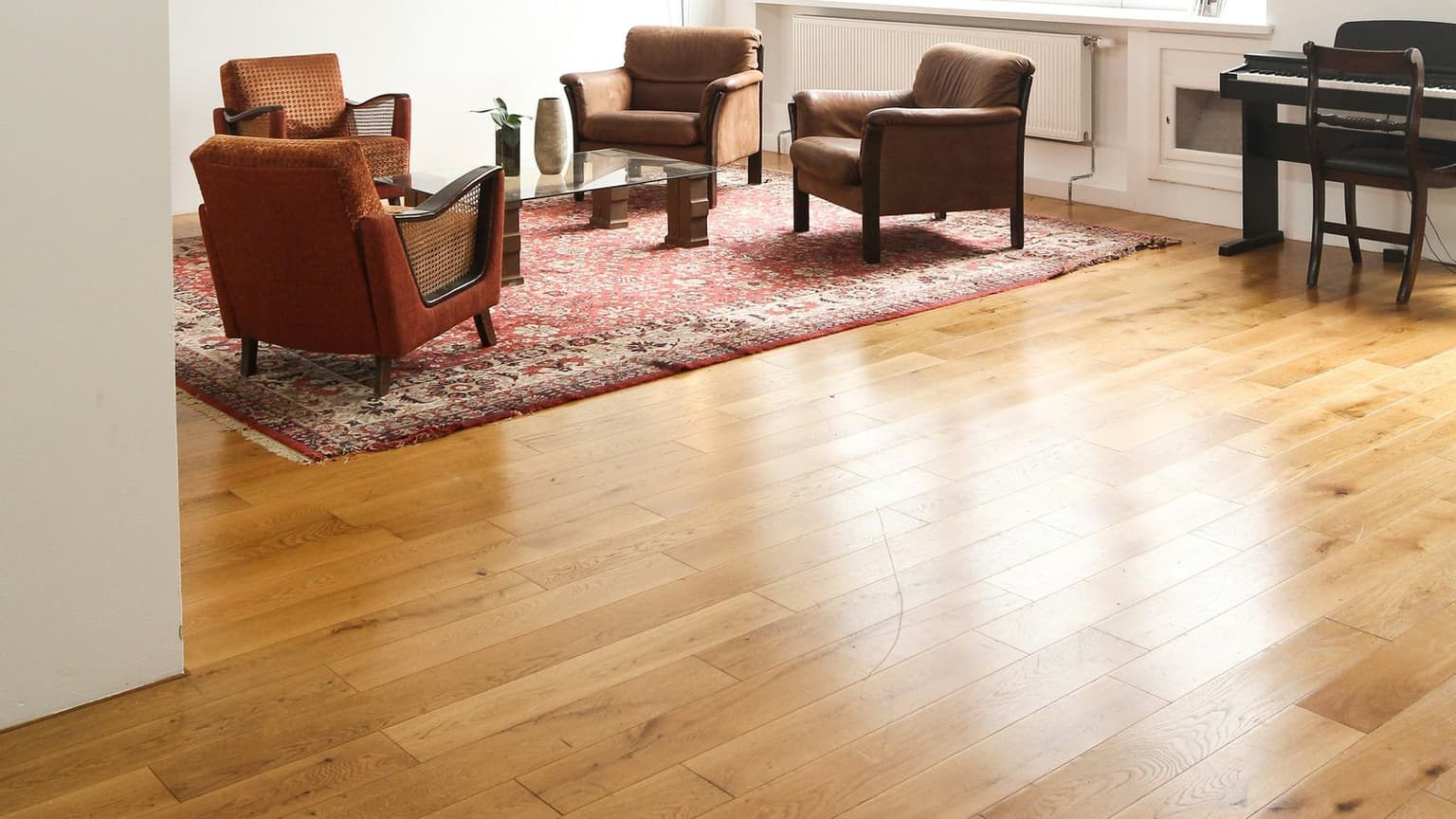
Stand at your front door some evening and look down the hall with the porch light behind you. If your floors are a few years old, you'll probably see it: a soft, matte lane running right down the middle, with a brighter strip of shine on either side near the baseboards.
Nobody did that on purpose. It's what thousands of ordinary steps do to the finish on top of the wood. The wear follows the way your family walks, so the easiest way to understand it is to start where the dirt comes in and follow it through the house.
At the front door, grit is the real culprit
The finish on a wood floor is a thin, hard layer, and on its own it handles feet just fine. The trouble is what rides in on the feet. Yard sand and dried mud stick to shoe treads, and the first few steps inside drop most of it.
Then the next person steps on that grit and drags it a quarter inch. Each pass leaves a scratch too small to see. A few months of that, and the surface is covered in tiny scratches that scatter light in every direction, which your eye reads as dull. It's the same reason a frosted window looks cloudy.
So the entry takes the worst of it, and it's also the place where prevention does the most:
- A coarse mat outside and a softer one just inside. Between them they catch most of what's on a shoe before it reaches wood.
- Shoes off at the door, at least for the family. Even if guests keep theirs on, it cuts the daily load a lot.
- A quick sweep or dust-mop of the first few feet of floor every day or two. That's a two-minute job, and it's the most useful two minutes of floor care you'll spend all week.
Heels deserve a mention. A stiletto puts a person's weight on a point the size of a dime and can dent the finish, sometimes the wood under it. Boots and cleats mostly bring in more dirt.
Down the hallway, the lane forms
Hallways narrow everyone into the same eighteen inches. That's why the dull lane shows up there first and so clearly. Run your hand across it and it may even feel a little rougher than the edges.
Pets make the hallway worse. Dogs come in from the yard with sand between their pads, and when they sprint for the door that grit skids along the boards fast. Nails add fine marks of their own. Paws and fur also leave a little natural oil behind, which mixes with dust into a film that dulls the shine further.
A washable runner down a long hall helps, as long as you shake it out and wash it. Keep nails trimmed. Keep an old towel by the back door and wipe paws when the dog comes in muddy, which in a wet Pearland spring is most days.
Along the kitchen path, the damage is often residue
By the time traffic reaches the kitchen, a different problem shows up. Crumbs and drips get walked into the finish, and this is the room where people mop the most, so it's also where cleaning mistakes pile up.
Too much water is the big one. Wood and its finish don't like standing moisture, and a wet mop pushes water into the seams between boards. Over time that can dull the finish along the edges and, in bad cases, start to cup the boards.
The second mistake is product. A lot of cleaners that promise instant shine leave a coating behind. It looks great for two days, then it grabs every bit of dust and turns hazy, and the usual response is to add more. We see kitchens where the "dullness" is mostly layers of that stuff. Scrub pads and stiff brushes are the third mistake, because they scratch the finish the same way grit does, just faster.
Under the dining chairs, the arcs show up
The dining room looks like it gets less traffic, but the chairs get pulled out and pushed in several times every meal. If you look closely, there are usually little curved scratches fanned out behind each seat.
Felt pads help until they fill up with grit, and then they work against you. Check them every couple of months. Pull off any that have gone flat or gray and replace them on a clean leg. Shifting the table a few inches now and then also spreads the wear around so one spot doesn't take all of it.
What cleaning fixes, and what it doesn't
A good professional clean takes off the grit and the built-up product, and a lot of floors that look worn out are really just dirty and coated. Our hardwood floor cleaning uses a pH-neutral solution with very little water, safe on finished, engineered and prefinished floors. Your technician looks at the floor with you first, gives you the price, and then cleans; the floor is usually ready to walk on soon after.
What it won't do is erase scratches cut into the finish or the wood. Once the finish has worn through in a traffic lane, you're looking at a refinishing contractor, and we'll say so honestly if that's where your floor is. We don't sand or recoat. For most homes a professional clean once or twice a year, plus the habits above, keeps it from ever getting there. Our sister site Hardwood Restore has more on telling buildup from real wear.
If you can only change one thing this week, put a second mat inside the front door. Most of the wear in the rest of the house starts at that spot.