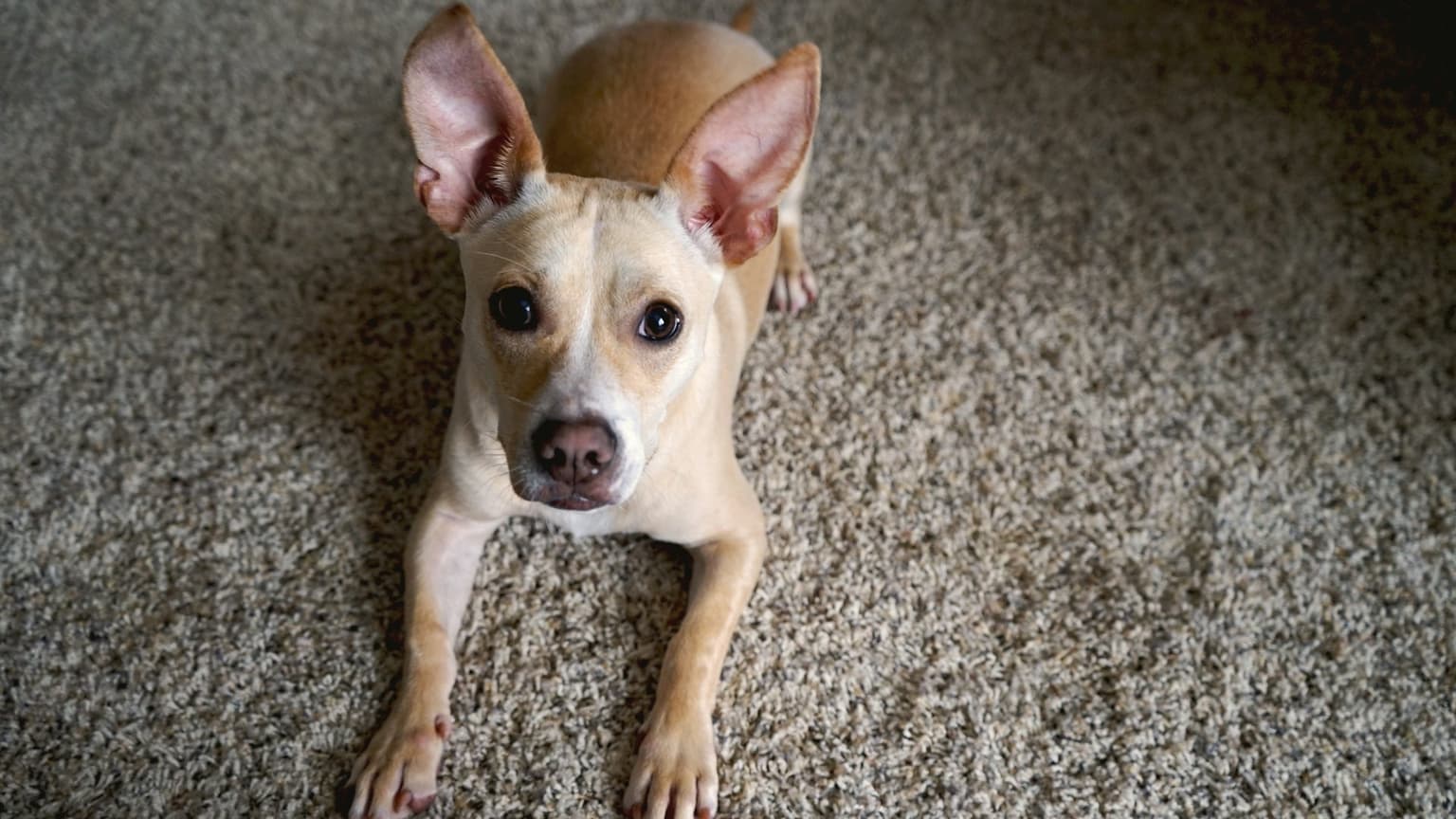
The dog keeps going back to the same corner by the back door. You've scrubbed it, sprayed it, put a chair over it, and the smell comes back every time the house warms up. That pattern tells us exactly what's going on: the urine soaked past the carpet fibers into the pad, and the pad is still feeding odor up into the room.
Most of the pet calls we get around Pearland sound something like that. A lot of them come from the master-planned neighborhoods, Shadow Creek Ranch and Silverlake especially, where the original builder carpet sits on a thin pad that soaks up a puddle like a sponge. The top of the carpet dries and looks fine. Underneath, it hasn't changed at all.
Finding the spots you can't see
We start with a UV light. Old urine glows under it, so the technician can walk the room with you and mark every spot, including the three you didn't know about behind the couch. Cats are the usual culprits for those. It takes a few minutes and it changes the whole job, because we treat what's actually there and skip the guessing.
Then you get a price for the work before anything starts.
What the enzyme does down in the pad
Surface cleaners and store-bought sprays mostly sit in the top half inch of fiber. Our live enzyme treatment is applied heavily enough to travel down through the backing and reach the pad, where the odor really lives. The enzymes break down the uric salts and the organic material the smell comes from, and they keep working for a while after we apply them.
After that dwell time, we clean the carpet with our regular low-moisture process. It lifts the loosened residue and the stain along with the everyday dirt, without flooding the floor, and the room is usually dry enough to walk on within about an hour.
We treat the same way on area rugs and upholstered furniture, right there in your home. Cushions that a cat has claimed are fair game, though fabric type decides how aggressive we can be.
The same process handles more than urine. Vomit, food, grease and the odd paint drip all respond to a pre-treatment matched to what the stain is. We'll tell you honestly which ones we expect to come out completely.
Where this stops working
Here's the part some companies skip. If a pet has used one spot for years, the urine can soak clear through the pad and into the subfloor or the tack strip. No cleaning from above fully fixes that. In those cases the right answer is to pull back the carpet, replace that section of pad and treat the slab or wood underneath, and we'll tell you so during the walk-through.
Some old urine stains also change the color of the fiber itself. We can remove the odor and most of the stain, but a faint yellow shadow may stay.
Our honest opinion: call early. A fresh accident treated within a week or two is a much easier fix than one that's been "handled" with a spray bottle since spring. Blotting with plain water and a towel is fine in the meantime. Skip the steam rental and the heavy shampoo, which push urine deeper and leave a sticky film that pulls dirt in.
Booking a pet treatment
Pet odor treatment is $25 off right now; you'll find it on our coupons page. If urine is the main problem in your house and you want more detail on how it travels through carpet, our sister site at pet-urine-removal.com goes deeper into it.
Plenty of people pair this with a full carpet cleaning of the room, since the area around a pet spot is usually as dirty as the spot. You can book online or call 281-506-4808, and the work is covered by our 100% satisfaction guarantee.