
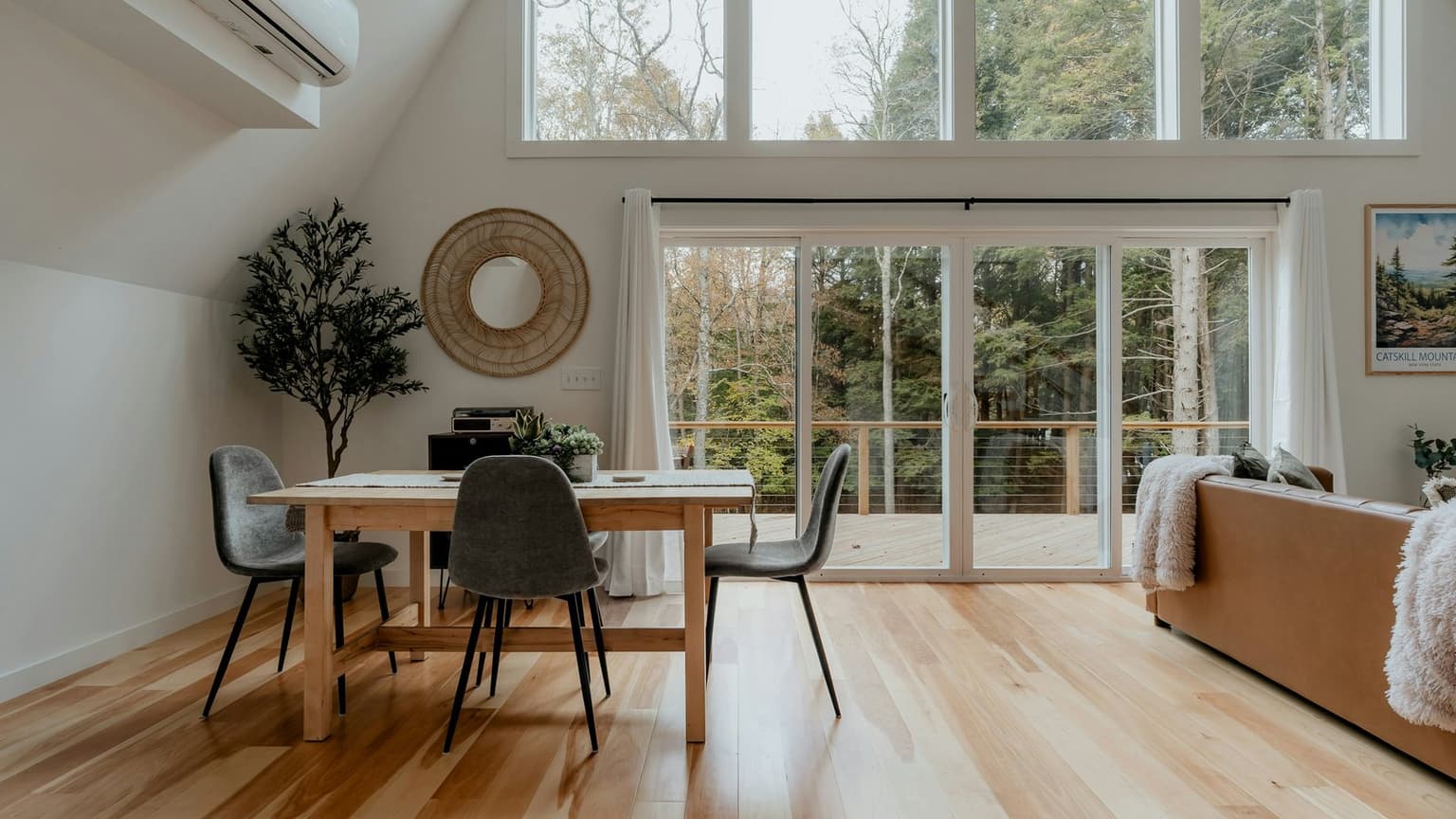
The bookcase comes off the wall, and there it is: a perfect rectangle of floor you haven't seen in six years, framed by a gray fringe of dust and one missing Lego.
Moving day, or even a big rearrange, is the one time the whole hardwood floor is open at once. It's also when a lot of floors get scratched, because the cleaning and the lifting happen in a rush. Here's the order we'd do it in, starting the morning before the truck and ending with the last chair going back in place.
Before the truck shows up
Clean the feet of the furniture while you can still tip it. Felt pads collect grit, and a pad loaded with sand behaves like sandpaper the second a dresser slides on it. Peel off anything worn, flattened or half detached, and look for exposed staples or cracked plastic glides on the chair legs.
Then lift, don't drag. The National Wood Flooring Association says the same thing every flooring guy will tell you: carry heavy pieces or put them on a dolly, and keep them off the floor while they move. A chair with one grain of grit under a leg can draw a line across three boards in a second. If movers are coming, ask them to lay runners or blankets down the main path to the door.
The empty room
Resist the mop. This is the hardest part for most people, because the floor looks filthy and water feels like progress. It isn't yet. Fine grit gets pushed around by a wet pad and turns dust into a gray film that smears across the boards.
Go dry first. A microfiber dust mop or a vacuum with the brush roll switched off will pick up the dust and pet hair that settled under the bed and behind the TV stand. Work slowly along the baseboards and the edges where furniture sat, because that's where the fringe builds up. Pet hair especially needs to come up dry. Once it gets damp it clumps onto the mop head and sticks in the seams between boards.
Now look at the floor in good light, daylight from a window if you can get it. You're trying to sort what you see into two piles: stuff sitting on top of the finish (loose dust, a dull haze, the odd sticky spot, a cloudy ring from a plant) and stuff that's in the wood (scratches, gouges, dark stains). Only the first pile is a cleaning problem.
For the light clean, a barely damp microfiber pad and a cleaner made for finished wood floors is plenty. Keep it to a mist. Leave the steam mop in the closet, and skip any all-purpose spray that says it works on every surface in the house, because some of those leave a haze on wood finish that takes a pro clean to get off.
The outlines under the dressers
This is where people panic, and usually they don't need to.
A lighter or darker rectangle that matches the exact shape of the old furniture is almost always about light, not dirt. Sunlight changes the color of wood and finish over time, and the floor under a dresser hasn't seen sun in years. The open floor around it has also had years of foot traffic and cleaning that the covered spot never got. Cleaning can soften the edge by taking surface buildup off the open part. It can't make the two colors match. Leave the area uncovered and in normal light for a few months, and most of these outlines fade on their own.
Sometimes there's a sharp line that isn't from light at all. If you've always mopped around a sofa, the pad stopped at the same edge for years, and the floor outside that line can carry more dried product than the floor inside it. That kind of edge does respond to a good clean.
Sticky spots are next. Under furniture they're usually an old drink, food, cleaner that dried at the edge of a cabinet, or adhesive that bled from a felt pad. Skip the putty knife and the scouring pad. Several gentle passes with your wood cleaner, letting it sit a minute each time, is safer than one hard scrub. If a spot still won't budge, let it go and leave it for a professional; a scratched finish is a lot worse than a tacky patch.
Then there's the one nobody wants to find: an old pet accident at the back corner of where the couch was. Don't pour a carpet pet odor product on it. Those are made for fibers and padding, and some of them are rough on wood finishes. Figure out what you have first. A surface ring or a faint smell is a cleaning job. Boards that have gone dark or started to cup mean urine got into the wood, and that's a job for a flooring contractor.
Moving back in
Let the floor dry all the way before anything goes back down. With a damp-pad clean that's quick, but rugs are the exception: give it extra time before you put a rug over freshly cleaned wood so no moisture gets trapped underneath. Vacuum the rug itself, and if it came out of storage looking dull, this is a good week to have it cleaned.
Put fresh felt pads on clean legs, then place each piece. Set it down, don't scoot it the last two inches. Dining chairs matter more than the big pieces here because they move every single day.
When it's worth calling us
If the floor still looks cloudy after your own clean, or the buildup in the traffic areas makes the newly exposed spots look like a different floor, our hardwood floor cleaning is built for that. It's a pH-neutral clean that uses very little water, and it's safe on finished, engineered and prefinished wood. We clean the floor you have. We don't sand, refinish or add a coating, so there's no smell and no waiting days to walk on it. Deep scratches through the finish are outside what cleaning can do, and we'll tell you so on the walk-through. There's $50 off hardwood on the coupons page, and if the bedrooms are carpet, a move is the easiest time to get both done while the rooms are empty.
A floor under a bookcase gets one good chance at a cleaning every decade or so. That chance is the day the bookcase is gone.