Somebody spills a glass of grape juice on the family room carpet. Within ten seconds there's a sponge, a spray bottle of something blue and a lot of elbow grease involved. The spot fades. Two weeks later there's a fuzzy, slightly gray patch right where it was, and it never quite matches the rest of the floor again.
That patch is what this post is about. Almost every carpet that wears out early in a well-kept house got that way through habits that felt responsible at the time. Here are the ones we run into most, roughly in order of how much damage they do.
1. Waiting until the carpet looks dirty
This is the big one, and it's the hardest to see coming.
Carpet is designed to hide soil. The pile is dense, the colors are chosen to forgive, and most of the dirt settles down near the backing where you can't see it from standing height. So the carpet looks fine for a long time, and that's exactly why people put off cleaning it. No stains, no smell, the vacuum seems to be keeping up. Why pay for a cleaning?
Meanwhile the grit down at the base of the fiber is doing slow work. Every step files at the fiber like an emery board. In the walk paths (hallway, the back-door-to-kitchen stretch, the strip in front of the sofa) the fiber tips fray and the pile starts to lie down. By the time the carpet looks dirty enough to call someone, that wear has been going on for a year or more, and cleaning removes the soil but can't restore fiber that's already been worn flat.
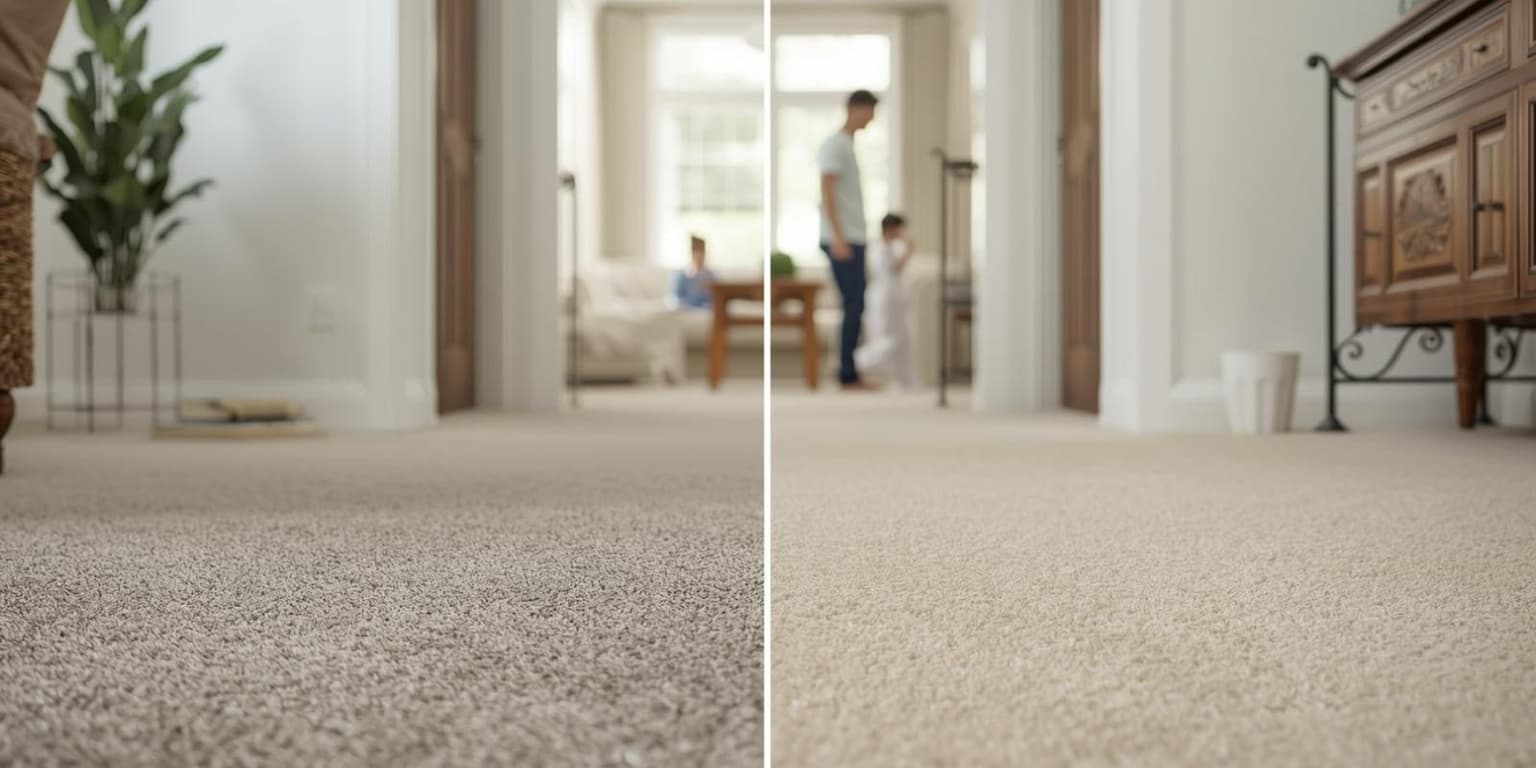
What works is a schedule based on how the house is used. For most homes that's every 6 to 12 months, closer to six if you have pets or a door that opens straight onto the yard. Cleaning before the carpet looks dirty feels like wasted money right up until you compare two rooms that were treated differently for five years.
2. Using too much cleaning product
When a spot doesn't come out on the first try, the instinct is to spray more. The spot might lighten, but a lot of that product stays in the carpet. Store shampoos and spot sprays tend to leave a soapy film behind, and that film grabs dirt from every sock and paw that crosses it. That's how you end up with a spot that's darker a month later than it was the day you cleaned it.
Use a small amount, blot, and let it dry before you decide whether to go again.
3. Scrubbing a spill
Scrubbing frays the fiber and pushes the spill down toward the pad. Blot with a white towel from the outside of the spot toward the middle, and keep switching to a clean section of the towel.
4. Reaching for deodorizer powder
Powders and scented sprays cover a smell for a few days. They don't remove what's causing it, which is usually something that soaked into the backing or the pad: a pet accident, a spilled drink, moisture off a mopped floor next to the carpet edge.
The other problem is what's left behind. Fine powder works its way down into the pile, where it behaves a lot like the grit from mistake number one. Use it every week for a year and you've added your own abrasive to the carpet. If a smell keeps coming back, the source is still there, and it needs to be cleaned out or, for pet urine, treated with an enzyme at the pad. Our pet odor and stain removal page explains how that works.
5. Cleaning the spots and ignoring the lanes
Spot cleaning handles the obvious. It doesn't touch the traffic lanes, which collect more soil than any single stain and wear out first. Give the whole room an even cleaning so the lanes don't fall behind and leave you with a floor that's two colors.
The pad underneath matters here too. It soaks up whatever gets past the backing, so a room can look clean and still smell off on a humid afternoon because the problem is a layer down.
6. Overdoing it with a rental machine
A rental machine used once in a while, correctly, isn't going to ruin anything. The trouble starts when it becomes the monthly fix. Those machines put down a lot of water and a lot of soap, and they rarely pull back as much as they put down. The carpet stays wet for hours, the pad gets damp, and the soap residue from mistake number two builds up with every pass.
If you've been renting a machine and the carpet keeps getting dirty faster each time, that's the residue talking, and another rental pass will only add to it. Our carpet cleaning uses a soap-free solution and very little water for that reason, so there's nothing left in the fiber to attract dirt and the floor is dry the same afternoon.
None of these are hard to fix once you know about them. The one I'd actually change this week is the first: put a date on the calendar six or twelve months out and stop waiting for the carpet to tell you it's time, because by then it's already lost something.