
Same-Day Service Available!

Tile floors can make a home feel fresh, bright, and easy to maintain, but grout usually tells the real story. Here in Pearland, Texas, we see it all the time. The tile may still look decent from a distance, but the grout lines start darkening, corners pick up buildup, and high-traffic areas lose that clean, crisp look faster than homeowners expect. The good news is that tile and grout cleaning does not have to feel like a constant reset. When the right habits are in place between deep cleans, floors can stay cleaner longer and feel easier to manage week after week.
This matters because grout is porous. It holds onto soil, moisture, residue, and everyday mess in a way that smooth tile surfaces do not. Kitchens collect grease and food splatter. Bathrooms collect humidity and soap film. Entryways collect tracked-in dirt from shoes, pets, and rainy days. Once those materials settle into the grout, the floor can start looking worn even when it is being cleaned regularly. Many people think they need stronger products, but the bigger issue is often the routine itself. The best way to keep grout looking better longer is to reduce what settles into it in the first place.
Deep tile and grout cleaning is important, but what happens between those cleanings has a major effect on how long the results last. The IICRC recommends a no-rinse neutral pH cleaner for regular care because acidic or alkaline cleaners can degrade grout sealer over time and leave behind soil-attracting residue. It also recommends sweeping or dusting hard floors before wet cleaning and using microfiber tools as part of regular maintenance. IICRC tile, stone, and grout care tips.
That advice fits what we see in Pearland homes. Floors stay cleaner longer when homeowners remove dry debris often, avoid flooding the surface, and use gentle products that do not leave buildup behind. Small choices add up. A better mop routine, faster spill cleanup, and a little more attention to high-traffic areas can make a big difference in how often the grout starts looking dingy again.
We have spent more than 30 years building a cleaning philosophy around healthier homes, practical results, and customer satisfaction. Safe-Dry’s broader brand approach centers on safe, hypoallergenic, soap-free cleaning without harsh chemicals, along with low-moisture methods designed to leave surfaces cleaner, drier, and residue-free. That kind of thinking matters for tile and grout cleaning because leftover residue and excess moisture are two of the biggest reasons floors start looking dirty again too quickly.
Our quick-drying mindset also matters in a place like Pearland, Texas, where moisture and humidity can already be part of daily life. The EPA’s guidance on mold and moisture emphasizes fixing water problems quickly and drying wet areas completely. That is a good reminder that keeping grout cleaner longer is not only about appearance. It is also about controlling moisture so the floor stays healthier and easier to care for over time. EPA mold and moisture guidance

The first and most important habit is also the easiest to overlook. Dry debris has to come off the floor before it mixes with moisture and settles into grout lines. Dirt, dust, pet hair, crumbs, and fine grit may not seem serious on their own, but once they get stepped on and mixed with dampness from shoes, mopping, or spills, they become much harder to remove. That is when grout starts looking dark even if the floor is being cleaned often.
In Pearland homes, this matters because hard floors usually sit in busy zones. Entryways, kitchens, mudroom paths, and hallways all collect debris faster than people think. If that loose material stays on the floor too long, it keeps getting pushed deeper into the grout. A quick sweep or microfiber dust pass can stop that cycle before it starts.
This step is one reason tile and grout cleaning results last longer in some homes than others. It is not always about who scrubs harder. It is often about who removes the dry mess first. If you stay ahead of the loose debris, the grout has less to absorb and your routine wet cleaning becomes much more effective.
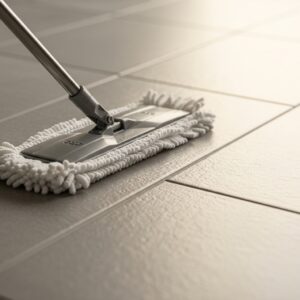
A soaked mop can make a tile floor look cleaned for a short time, but it often leaves too much moisture and dirty water behind. Grout absorbs what sits on it, so a heavy mop routine can work against you instead of helping. A microfiber system with controlled dampness usually does a better job of lifting light soil without flooding the surface.
This matters because too much water often turns into two problems at once. First, the grout stays damp longer than it should. Second, the dirty water can settle back into the lines instead of being removed. That leaves the floor looking dull again much sooner than expected. The IICRC specifically recommends microfiber flat mop systems for hard floors and advises sweeping or dusting before wet cleaning for better maintenance results.
Here in Pearland, a lower-moisture approach also fits the way families actually live. People want the floor cleaner, but they do not want it staying wet too long or turning into a constant cycle of mopping and re-soiling. Using a better tool with less water helps the room get back to normal faster and supports that cleaner look between deep cleans.
Not every floor cleaner helps tile and grout stay cleaner longer. Some products leave a film behind, and that film can attract fresh dirt quickly. When that happens, the tile may look cloudy and the grout may start darkening again even though you just cleaned it. Many homeowners mistake that for stubborn dirt when it is actually residue buildup.
A no-rinse neutral pH cleaner is usually the safer routine choice for hard surface floors because it is less likely to break down grout protection or leave behind a sticky layer. This is one of the most practical ways to support tile and grout cleaning between deep services. The goal should be to remove light soil and leave the floor clear, not to coat it with something that will grab onto tomorrow’s dirt.
This is also where Safe-Dry’s soap-free and residue-free mindset makes sense. When you avoid dirt-attracting residue, surfaces stay cleaner longer and routine maintenance works better. It is often not about doing more. It is about leaving less behind.
Spills are much easier to manage on tile than on many other surfaces, but grout changes the equation. Liquid that sits on the floor too long can sink into the grout lines and become more than just a quick wipe-up. Kitchens see food drips, grease mist, sauces, and drink spills. Bathrooms see splashes, toothpaste, soap residue, and water around sinks and tubs. If these messes sit, the grout holds onto them.
Fast cleanup protects both appearance and maintenance. When homeowners wipe spills quickly, they reduce the chance of staining, sticky residue, and extra moisture settling into the grout. This is especially important in Pearland homes with active kitchens, kids, pets, or busy bathroom routines. Small messes become grout problems when they are allowed to sit.
The habit does not need to be complicated. Keep a cloth or paper towel handy and treat small spills as they happen. This one step helps protect the results of your last tile and grout cleaning more than many people realize.
Not all grout gets dirty at the same speed. Some sections of the floor carry most of the daily wear. Entry lanes, sink areas, stove zones, bathroom walkways, and paths between rooms usually take the worst of it. These are the places where grout starts darkening first, and they often make the whole room look dirtier than it is.
A smart maintenance routine should reflect that. Instead of treating every square foot exactly the same, give extra attention to the areas that see the most traffic. Sweep them more often. Spot-clean them sooner. Watch for residue around kitchen work zones and moisture near bathroom exits. Keeping those sections under control helps the entire floor hold its cleaner look longer.
This is also where a little strategy can save time. You do not always need to mop the whole room heavily. Sometimes the better move is to stay consistent in the areas that take the most abuse. That targeted care helps the floor look more even between deep cleans and makes the grout feel more manageable overall.
One of the easiest ways to keep tile and grout clean longer is to stop some of the mess before it reaches the floor in the first place. Entry mats help catch dirt, moisture, and fine debris from shoes before those materials get ground into grout lines. This matters more than many homeowners realize because a lot of tile floor grime does not start in the kitchen or bathroom. It starts at the door.
Here in Pearland, Texas, entryways often deal with muddy shoes, damp soles, yard debris, and regular outdoor dust. Once that dirt comes inside, it travels fast. People walk it into hallways, kitchens, and family rooms without thinking about it. The more it spreads, the more chances it has to settle into porous grout lines.
A good mat system at main entrances can help reduce that load. It is also helpful to encourage shoes off in certain areas of the home or at least keep the heaviest outdoor footwear from crossing the most used tile surfaces. This does not have to be strict to help. Even a small reduction in tracked-in dirt can make tile and grout cleaning results last noticeably longer.
The reason this works so well is simple. It is easier to prevent debris from entering than to keep scrubbing it out later. When less dirt reaches the grout, routine maintenance becomes easier and the floor keeps its fresh look longer.
Bathrooms are one of the fastest places for grout to start looking dull, dark, or uneven. Water splashes, humid air, soap residue, and everyday use all work together to make grout harder to maintain. That is why moisture control matters so much in bathroom tile care. If the grout stays damp too often, the floor can begin feeling less fresh even when it gets cleaned regularly.
The EPA emphasizes that moisture problems should be addressed quickly and that wet materials should be dried as soon as possible. That principle applies well to tile floors too. EPA mold and moisture guidance. (epa.gov) A quick towel pass around shower exits, tub edges, and sink areas can help reduce lingering dampness before it settles into grout lines.
This step is especially useful in Pearland homes where warm, humid conditions already make drying slower than people expect. The less standing water and damp residue the grout has to absorb, the easier it is to keep that cleaner look between deep cleans.
Bathroom care does not need to be complicated to work. A few extra seconds after showers or heavy sink use can help prevent the slow buildup that leads to more frustration later. Staying ahead of daily moisture is one of the smartest ways to protect tile and grout.
One of the biggest mistakes people make with tile floors is waiting until the whole room looks dirty before doing anything. By then, the grout in the worst sections has usually been holding onto buildup for a while. It is often more effective to revisit problem zones early than to wait for the entire floor to need a big reset.
Problem zones are usually easy to identify. Around the stove. In front of the kitchen sink. Next to the bathroom vanity. Near the garage entry. Around pet feeding stations. These are the places where sticky residue, splashes, foot traffic, and repeated use tend to combine. If you clean those sections more often, the room as a whole usually stays in better shape.
This is also where a light booking nudge makes sense. If you are noticing that the same zones keep turning dark no matter how often you wipe them, it may be a sign that the grout needs a deeper reset before regular maintenance can work well again. Professional tile and grout cleaning in Pearland, Texas can help restore those problem areas so your everyday routine has a cleaner starting point.
Think of this step as early intervention. The faster you catch buildup in the places that get hit hardest, the less likely it is to spread across the room and turn into a full-floor cleaning problem.
A tile floor care plan only works if people can realistically keep up with it. That is why simple routines usually outperform complicated ones. If the maintenance process feels like too much work, it tends to get delayed, rushed, or skipped. When that happens, grout picks up momentum in the wrong direction and starts looking dirty again much faster.
Simple routines work because they fit real life. A quick sweep every couple of days. A fast wipe of bathroom moisture. A light microfiber pass instead of dragging out a soaked mop bucket. Fast spill cleanup instead of letting messes sit until the weekend. Those are the habits that make tile and grout cleaning results last longer without turning floor care into a constant project.
This approach also fits the family-safe, low-stress mindset we believe in. A floor should not need harsh chemicals and exhausting effort just to look decent. It should respond to consistent, practical care. That is what keeps the room livable and helps homeowners feel like the floor is under control instead of always slipping behind.
The best routine is the one you can actually repeat. When maintenance is simple and realistic, grout stays cleaner longer because the floor gets the attention it needs before buildup takes over.
Even the best maintenance routine has limits. There comes a point when the grout needs more than sweeping, light mopping, and targeted touch-ups. If the lines still look dark after cleaning, if tile feels sticky or cloudy no matter what you use, or if certain areas never seem fully fresh, the floor may need a professional reset.
This is not a failure of your routine. It is part of normal home care. Deep tile and grout cleaning removes the embedded soil, old residue, and traffic buildup that everyday maintenance can no longer handle on its own. Once that deeper layer is gone, your regular care starts working better again. Sweeping makes a bigger difference. Light mopping looks more effective. High-traffic areas stay under control longer.
For many homeowners in Pearland, this is the step that finally breaks the cycle of constant frustration. Instead of using more product, more water, and more energy on a floor that still looks dull, they reset the surface properly and then maintain it from there.
Knowing when to stop chasing the same problem with home tools is part of smart tile and grout cleaning. Sometimes the best way to keep the floor cleaner longer is to give it the kind of deep clean that routine care can build on instead of constantly trying to compensate for.

One of the biggest benefits of keeping tile and grout clean longer is that the room simply stays more attractive day to day. Clean grout makes tile look brighter, more even, and more cared for. When the grout starts darkening, the entire space can feel worn down even if the rest of the room is tidy. That is why the appearance payoff matters so much.
In Pearland homes, tile often covers kitchens, bathrooms, laundry spaces, mudrooms, and shared walkways. These are busy rooms that shape how the house feels overall. When the tile and grout stay cleaner, the space feels lighter and more put together without homeowners needing to do major work to maintain that impression.
This benefit also saves energy mentally. People often feel more relaxed in spaces that look clean and under control. A floor that holds its cleaner look longer becomes one less thing to stress over during the week. That is a practical quality-of-life benefit, not just a cosmetic one.
Grout is porous, which means it does not just show dirt. It holds onto it. The longer grime, moisture, and residue sit in the grout, the more likely they are to become stubborn buildup rather than a quick maintenance issue. That is why keeping tile and grout cleaner between deep cleans matters so much for long-term floor care.
When homeowners stay ahead of the mess, they reduce how much material settles into the grout in the first place. That makes later cleaning easier and helps prevent the floor from reaching that point where every grout line looks darker than it should. Instead of constantly trying to recover the floor, you help preserve its better condition over time.
This matters because once grout gets heavily loaded with residue and soil, routine maintenance loses effectiveness. Sweeping and light mopping stop making much visual difference. Keeping the grout cleaner longer helps you avoid that frustrating cycle.
A floor that is already in decent shape responds much better to normal maintenance. Sweeping feels worthwhile. A quick microfiber pass actually changes the look of the room. Spot-cleaning solves small messes instead of blending into a generally dirty surface. This is one of the most useful benefits of longer-lasting tile and grout cleaning results.
In a home where the grout is already overloaded with old soil and cleaner buildup, every routine cleaning task feels less rewarding. Homeowners work hard and still feel like the floor barely improved. That is discouraging, and it often leads people to use stronger products or more water, which creates more problems. By keeping the floor cleaner between deep cleans, you help your routine work the way it should.
This also saves time. Instead of repeatedly battling the same issues, you maintain a cleaner baseline. That makes weekly care shorter, simpler, and much easier to keep up with.
Tile floors are often chosen because they feel cleaner and easier to manage than many other surfaces. But when grout is loaded with old spills, tracked-in grime, and lingering residue, the room can stop feeling as fresh as it should. Keeping tile and grout clean longer helps support a healthier-feeling home by reducing the buildup that gathers in those porous lines.
This is especially important in kitchens and bathrooms, where moisture and daily mess are part of normal life. A cleaner grout line does not just look better. It supports a fresher overall environment. The room feels more comfortable, and surfaces feel more consistent with the kind of home care families are trying to maintain.
That matters in Pearland households where hard floors handle a lot of daily activity. The more the floor supports that rhythm instead of fighting against it, the easier the whole home feels to manage.
When tile and grout start looking bad too quickly, many homeowners respond by trying stronger products, scrubbing harder, or using more water. That usually creates more frustration instead of better results. One of the biggest benefits of keeping grout cleaner longer is that it lowers the temptation to keep experimenting with aggressive methods that may not help.
A floor that responds well to simple maintenance gives people confidence. They do not feel like they need to “attack” the grout every weekend. They can stick to safer, more practical habits and still see results. That lowers the chance of residue buildup, sealer damage, or floors that stay overly wet from constant heavy mopping.
In other words, better daily maintenance protects you from unnecessary over-cleaning. It helps you avoid turning a manageable issue into a bigger one through frustration.
Some sections of the home never really get a break. Entryways, sink areas, kitchen work zones, and bathroom paths get hit all day long. These are the same places that make the home feel dirty fastest when the grout starts darkening. Keeping those areas cleaner longer has an outsized effect on the overall feel of the space.
This benefit is one of the most practical ones because it improves the rooms people use the most. When a kitchen floor looks cleaner, meal prep feels more comfortable. When the bathroom tile feels fresher, the room feels more livable. When the entryway does not immediately look dirty, the home feels better maintained from the moment someone walks in.
Because these are the spaces families see every day, maintaining them well has a bigger impact than homeowners sometimes expect. Cleaner high-traffic grout helps the whole home feel more in order.
Tile is durable, but that does not mean it should be ignored. Over time, dirt, grit, residue, and moisture can affect how the floor ages. Keeping tile and grout clean longer helps preserve the look of the flooring and can help homeowners notice developing issues before they turn into bigger repairs.
This benefit matters financially as well as visually. Floors are a major part of the home, and keeping them in better condition supports the overall appearance of the property. Even if homeowners are not thinking about resale, they still benefit from a floor that continues to look cared for rather than prematurely worn down by avoidable buildup.
Routine protection always costs less than trying to recover damage later. That is one more reason longer-lasting tile and grout cleaning results are worth working for.
One of the best ways to keep tile and grout clean longer is to stop thinking of mopping as the main event. In most homes, the real problem starts before the mop ever comes out. Dust, grit, pet hair, crumbs, and tracked-in outdoor debris collect quietly all day long. Once that dry soil gets mixed with moisture, it settles into grout lines and becomes much harder to remove.
That is why dry soil removal should be the foundation of your routine. A quick sweep, vacuum for hard floors, or microfiber dust pass done consistently usually makes a bigger difference than people expect. It helps prevent the dirty slurry effect that happens when loose debris gets pushed around by a wet mop. The IICRC specifically recommends sweeping or dusting before wet cleaning and using microfiber systems as part of routine hard-floor maintenance. IICRC tile, stone, and grout care tips. (iicrc.org)
In Pearland, this matters because outdoor dirt does not stay at the door unless you actively stop it. Family traffic, pets, groceries, yard work, and normal daily movement all bring fine debris inside. If you can remove that debris early, your grout stays under much less pressure.
This tip is also one of the easiest to maintain. You do not need a full deep-cleaning session several times a week. You just need a habit that keeps loose mess from becoming embedded buildup. Over time, that single shift in routine can make your tile and grout cleaning results last much longer between professional resets.
A lot of homeowners are actually over-mopping their tile floors without realizing it. The floor may look wet and freshly cleaned in the moment, but too much water can keep grout damp, move dirt into low spots, and leave the room feeling dull again as soon as it dries. This is especially true when the mop water gets dirty halfway through the room and keeps getting reused.
A better approach is lighter, more intentional wet cleaning. Use a microfiber system or a well-controlled damp mop instead of a soaked traditional mop head. Keep the moisture level low enough that the tile dries in a reasonable time and the grout is not being flooded. This fits both the IICRC’s maintenance guidance and the kind of quick-drying mindset that works well in busy homes. (iicrc.org)
This tip matters a lot in Pearland, where humidity can already slow down drying. If the floor stays wet too long after every cleaning, the routine starts working against you. It can also make people think they need stronger product next time, when the real problem was too much moisture all along.
Intentional mopping also helps you notice the floor better. You pay more attention to problem zones, sticky spots, and traffic patterns instead of giving every room the same heavy pass. That kind of awareness usually leads to better results than simply using more water and hoping for the best.
The two rooms that usually shorten the life of a clean tile floor are the kitchen and the bathroom. These spaces deal with the most moisture, the most repeated mess, and the most overlooked buildup. In kitchens, grease mist, food drips, coffee splashes, and cooking residue settle onto tile and around grout lines. In bathrooms, soap film, toothpaste, splashes, and humid air create a different kind of film that can make grout look darker and dirtier much faster.
Good home care means staying ahead of these two rooms instead of waiting until the whole floor looks bad. In the kitchen, wipe splatters quickly and pay extra attention to the area in front of the sink, dishwasher, stove, and trash area. In the bathroom, reduce leftover moisture with a quick towel pass near the shower exit, vanity, and toilet area. The EPA emphasizes drying wet areas promptly as part of good moisture control, which is a smart principle for bathroom tile care too. EPA mold and moisture guidance.
These small actions help because they prevent the grout from becoming the storage space for daily life’s mess. When kitchen residue and bathroom moisture are managed early, the grout stays closer to its cleaner baseline and routine tile and grout cleaning becomes much easier.
Most homeowners think about cleaning as something that happens after dirt appears. A smarter approach also includes reducing how much wear and debris hit the floor in the first place. This is where traffic management helps. Mats at entrances, rugs in strategic areas, pet-wipe routines, and even simple shoe habits can all reduce what reaches the grout.
In Pearland homes, the heaviest traffic usually moves from entryways to kitchens, hallways, bathrooms, and utility spaces. Those paths should be treated like high-risk zones, not surprises. Put mats where they can actually catch debris before it spreads. Keep them clean so they continue working. Consider using protective rugs in front of sinks or at doors where grime tends to concentrate. If shoes are often tracking in yard dirt or dampness, reducing that at the source can save a lot of later cleanup.
This tip works because grout darkening is often more about repetition than one major event. The same areas get hit over and over again. If you can reduce that daily load, you reduce the speed at which the grout starts looking tired. That means your last deep clean lasts longer and your normal maintenance feels more successful.
It is also practical. You do not have to turn your house into a strict no-shoes zone or constantly monitor everyone. Even modest traffic control can noticeably extend the clean appearance of tile floors over time.
One of the best home-care habits is knowing that professional tile and grout cleaning has a role in the routine. It is not just something to do once the floor becomes embarrassing. It is the reset that makes your regular maintenance work better again.
When grout is loaded with embedded soil, old cleaner residue, and traffic buildup, your home routine starts losing its power. Sweeping helps less. Damp mopping makes less of a difference. Problem zones keep looking dark no matter how often you touch them up. That is usually a sign the floor needs a true reset, not more experimentation.
Thinking about deep cleaning this way changes the whole strategy. Instead of waiting until the floor looks permanently dirty, you use professional cleaning to restore the baseline before frustration takes over. Then your lighter day-to-day care can maintain that result more effectively. This is also when homeowners often get the biggest value from the service. They are not just cleaning up a mess. They are making all future maintenance easier.
For Pearland households with active kitchens, bathrooms, kids, pets, and busy schedules, that reset can be the difference between always chasing the floor and finally feeling like it is under control.
A lot of people assume deep tile and grout cleaning has to mean strong fumes, harsh chemicals, and an overly disruptive process. We do not see it that way. Our broader cleaning philosophy is built around family-safe, hypoallergenic, soap-free cleaning that aims to clean effectively without loading the home with unnecessary harshness. Safe-Dry also emphasizes more than 30 years of service and a strong customer-first approach rooted in healthier-home thinking.
That matters for tile and grout because many of the problems homeowners are fighting come from buildup and residue in the first place. Using a cleaning philosophy that values cleaner results without adding more dirt-attracting film makes a real difference. A floor should feel fresher after service, not coated or harder to maintain afterward.
Families in Pearland often want exactly that balance. They want visible results, but they also want a process that feels practical for households with kids, pets, guests, and normal daily life.
One of the biggest frustrations with hard-floor care is when the cleaning process itself becomes inconvenient. Floors stay wet too long. Rooms feel blocked off. Grout seems to hold dampness longer than expected. That is one reason our low-moisture, quick-drying mindset matters so much.
Safe-Dry’s broader brand approach emphasizes using less water than traditional methods and focusing on faster dry times and cleaner, residue-free results.That kind of thinking fits tile and grout care well because excess moisture often creates more problems than people realize. It slows the return to normal use and can work against the long-term appearance of the grout.
In Pearland, where humidity is already part of the environment, controlled moisture is even more important. Homeowners do not need extra dampness sitting in grout lines after every major clean. They need results that feel effective and practical for the way their homes actually function.
A floor can look cleaner right after service and still not stay cleaner very long. That often comes down to residue. If a sticky film is left behind, new dirt grabs onto it faster and the whole cycle starts again. This is one reason our approach puts so much value on residue-free cleaning.
For tile and grout cleaning, this matters in a very practical way. Residue is one of the biggest reasons kitchens start looking cloudy again, bathroom floors lose that fresh feeling, and traffic lanes darken faster than expected. When the goal is not only to clean the floor but also to help it stay cleaner longer, reducing residue becomes essential.
This is also where our approach connects directly to what homeowners want from the service. They are not paying for a floor that looks better for one afternoon. They want a floor that becomes easier to maintain after the service. Residue-free thinking supports that.
At the end of the day, most people are not thinking about tile and grout in technical terms. They are thinking about whether the kitchen feels fresh, whether the bathroom feels clean, and whether the house feels easier to stay on top of. That is the real goal.
We understand that because we do not see cleaning as just a surface issue. We see it as part of how a home functions. When tile and grout are properly reset, the room becomes easier to maintain, easier to enjoy, and less mentally draining. That is why convenience and practicality matter just as much as the visible result.
For homeowners in Pearland, that often means wanting a service that respects their schedule, supports a healthier-home feel, and makes future upkeep more realistic. That is the kind of difference we aim to bring: not just cleaner grout, but a better experience living with the floor after the cleaning is done.
The right schedule depends on how the space is used. In many Pearland homes, kitchens, bathrooms, entryways, mudrooms, and laundry spaces need professional tile and grout cleaning more often than less-used rooms. A good general starting point is every 12 to 18 months, but homes with pets, kids, heavy foot traffic, or larger tiled living areas may benefit from service sooner.
The bigger question is usually not the calendar. It is how the floor is responding to your regular care. If the grout keeps looking dark no matter how often you sweep and mop, if the tile has a cloudy or sticky feel, or if high-traffic lanes always seem dingy, those are signs the floor may need a deeper reset. Waiting too long can make routine maintenance feel frustrating because the grout is already holding too much buildup for light home care to make a visible difference.
A professional reset works best when it restores the baseline before the floor feels impossible to manage. After that, your regular sweeping, microfiber mopping, and spill cleanup usually become much more effective. That is why timing matters. The goal is not to wait until the floor looks terrible. The goal is to schedule deep cleaning often enough that your day-to-day routine still has a clean foundation to build on.
The best approach is to reduce what reaches the grout in the first place. Since grout is porous, it darkens when dirt, residue, moisture, and everyday mess settle into it over time. That means the smartest routine focuses on prevention as much as cleanup.
Start with dry soil removal. Sweep, vacuum, or use a microfiber dust mop often, especially in entryways, kitchens, and other traffic-heavy areas. Loose dirt becomes a much bigger problem once it mixes with moisture and gets pushed into grout lines. Then keep wet cleaning controlled. Use a lightly damp microfiber system instead of a soaked mop, and choose a cleaner that does not leave behind a sticky film.
Fast spill cleanup also matters. Kitchen drips, bathroom splashes, and tracked-in moisture should be wiped up before they have time to settle into the grout. Entry mats can help reduce how much outdoor debris reaches the floor, and spot-cleaning high-traffic lanes more often than the rest of the room can help the whole floor stay more even in appearance.
The main idea is simple. If less dirt and moisture enter the grout, the grout stays cleaner longer. That is why the most effective routines are usually the most practical ones.
This usually comes down to one of three things: dirty mop water, leftover residue, or embedded buildup in the grout. A floor can be mopped regularly and still not look clean if the routine is mostly moving grime around instead of removing it. This happens a lot when the mop is too wet, the water gets dirty quickly, or too much cleaner is used.
Grout makes the problem even more noticeable. Even if the tile surface brightens a little after mopping, dark grout lines can keep the whole room looking dull. Since grout sits lower than the tile and absorbs more moisture, it tends to hold onto dirt and cleaner residue longer than people expect. That is why many homeowners feel like they are cleaning correctly but never getting the result they want.
Another issue is buildup from repeated product use. If cleaner leaves a film behind, that film can attract fresh dirt and make the floor feel sticky or cloudy once it dries. At that point, mopping more often may not help much.
When this happens, the floor often needs a deeper tile and grout cleaning reset instead of stronger or more frequent home cleaning. Once the embedded buildup is removed, routine maintenance usually becomes much more effective and the floor starts responding the way you expected all along.
It should be, and that is one reason the cleaning approach matters so much. Tile floors are some of the most active surfaces in the home. Kids walk and play across them. Pets move from room to room on them. Daily life happens around them constantly. Because of that, homeowners usually want a process that feels practical and family-safe, not harsh or overwhelming.
A better approach focuses on removing grime and residue without relying on unnecessary harshness or leaving behind sticky product that can attract more dirt later. It also helps when moisture is controlled so the floor does not stay wet longer than necessary. A quicker-drying result is not just about convenience. It also helps the home return to normal faster, which matters a lot in busy family spaces.
For routine home care, safety also comes from method. Using the right cleaner in the right amount, avoiding product mixing, and keeping mopping controlled can make a big difference. For professional service, it helps to choose a company that values a healthier-home feel and practical results rather than a harsh, heavy-handed process.
The overall goal should be simple: cleaner tile and grout that make the room feel fresher and easier to live with after the service, not more difficult to manage.
In most homes, a microfiber mop system is one of the best routine choices for tile floors. It gives you more control over moisture, lifts light soil effectively, and helps reduce the problem of pushing dirty water into grout lines. A traditional soaked mop can sometimes make the floor look freshly cleaned for a moment, but it often leaves too much moisture behind and can make grout look dull again faster.
For cleaner choice, a neutral cleaner is usually the safer routine option for tile and grout maintenance because it is less likely to leave a heavy residue. The IICRC recommends a no-rinse neutral pH cleaner for regular hard-floor care and warns that acidic or alkaline cleaners can break down grout sealer and attract more soil over time.
That means the best setup is usually not the strongest product on the shelf. It is a controlled system that removes light soil without coating the floor. Apply only what you need, keep the mop damp rather than soaked, and make sure dry debris is removed before you start wet cleaning.
The right tools make maintenance easier, but consistency matters too. Even a good mop and cleaner will not solve the problem if the floor is already carrying deep buildup that needs a more complete reset.
It is usually better to be careful with those kinds of products. Many homeowners reach for vinegar, bleach, or other strong cleaners because the grout looks dark and they want a quick fix. The problem is that harsher chemistry can create new issues, especially with repeated use. The IICRC advises using a no-rinse neutral pH cleaner for regular tile, stone, and grout care because stronger acidic or alkaline products can degrade grout sealer and contribute to soil-attracting residue.
That does not mean every strong cleaner causes immediate damage in every situation, but it does mean those products are not usually the best routine answer for keeping grout cleaner longer. They can also encourage a cycle where the floor seems to need stronger and stronger treatment because the underlying maintenance routine never improves.
A more practical approach is to use gentler products consistently, keep dry soil off the floor, control moisture, and clean spills quickly. That helps the grout stay in better shape between deep cleans without relying on aggressive methods that may not age well over time.
If the grout is already heavily loaded with soil and residue, a professional deep cleaning is often a better solution than trying harsher home chemistry over and over.

A good sign is when your effort stops matching your results. If you are sweeping regularly, using a reasonable cleaner, keeping moisture under control, and the grout still looks dark or the tile still feels cloudy, the floor may be beyond what routine maintenance can correct. The same is true if certain areas keep looking dirty no matter how often you touch them up.
Another clue is frustration. When homeowners start cycling through stronger products, more water, harder scrubbing, and still feel like nothing changes, that usually means the floor needs a deeper reset rather than more intensity. At that point, routine care is no longer building on a clean foundation. It is trying to compensate for embedded buildup.
Professional tile and grout cleaning makes sense when the floor needs that foundation restored. Once deep soil, residue, and traffic buildup are removed, your regular maintenance usually becomes much easier and more effective again.
Calling a professional is not giving up on home care. It is recognizing when the floor needs a different level of cleaning so your normal routine can start working the way it should again. Schedule your tile and grout cleaning today.